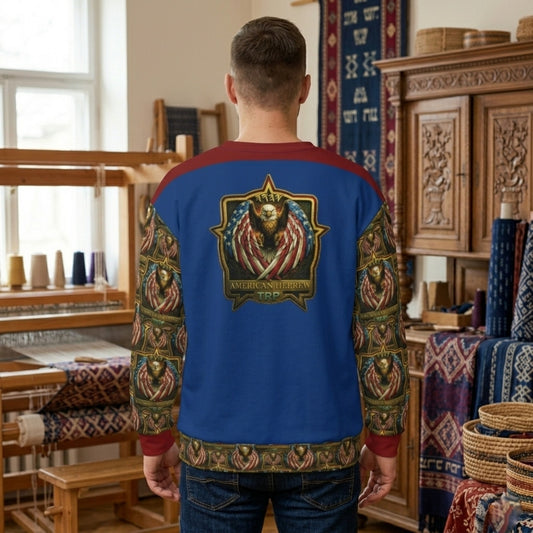
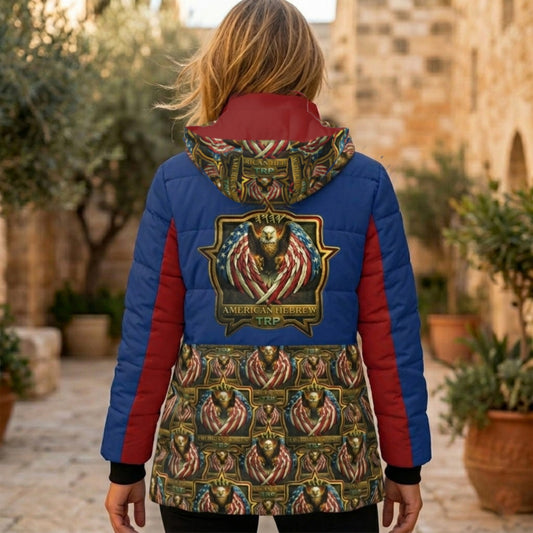
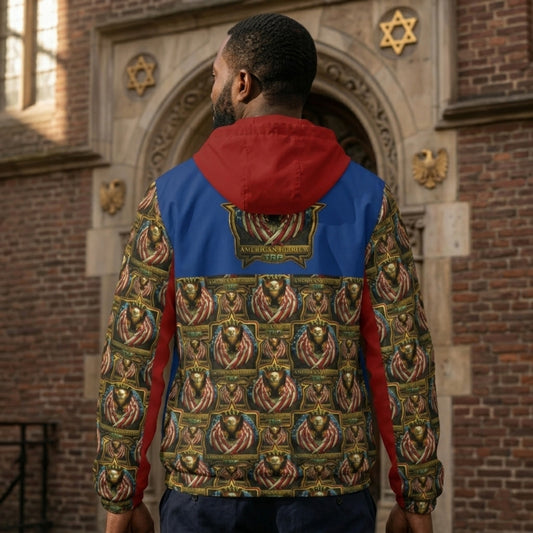
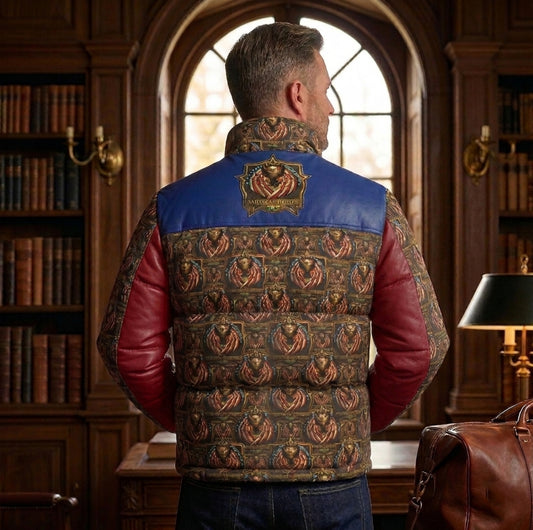
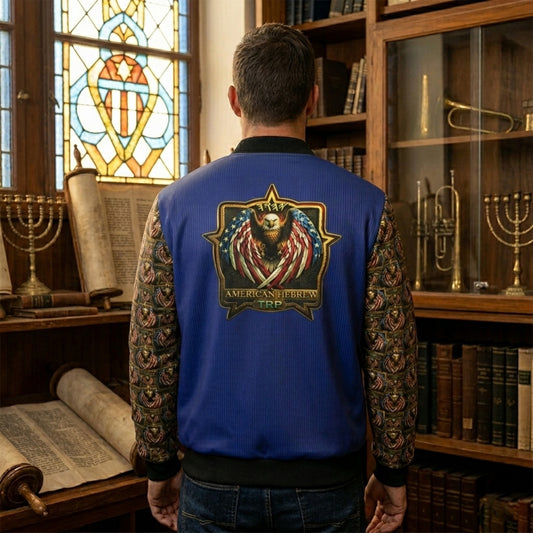
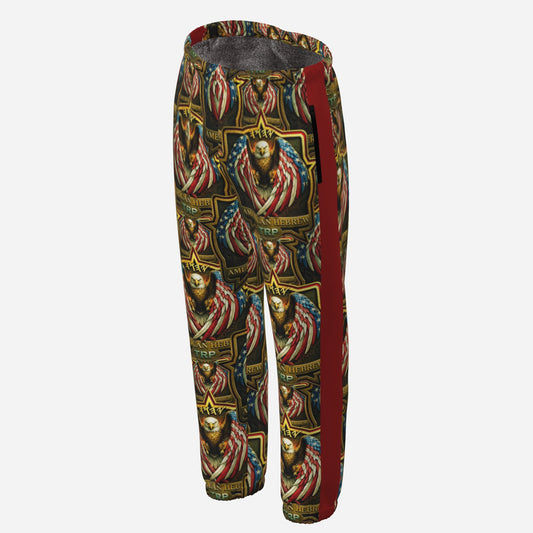
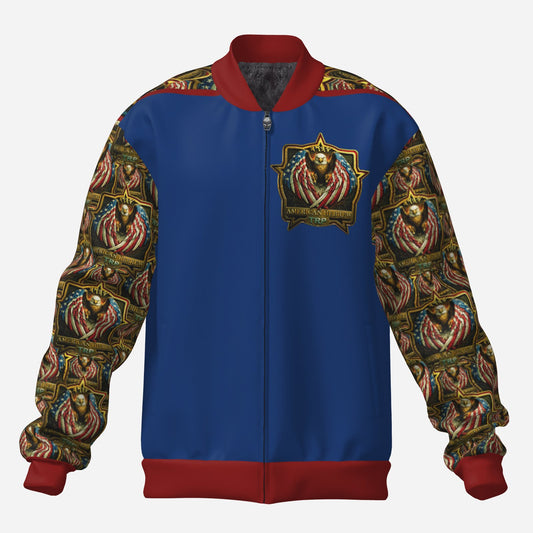
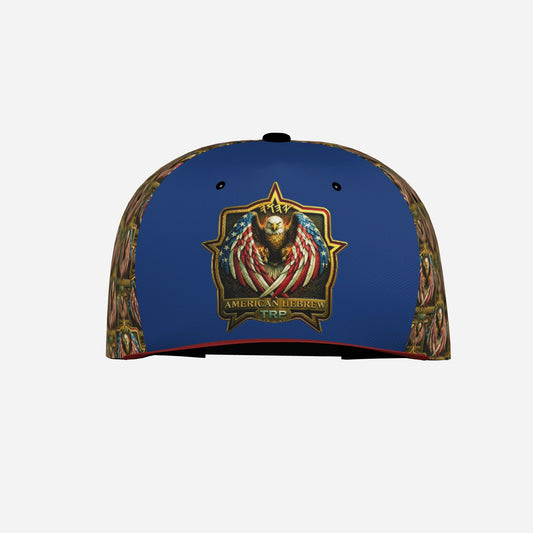
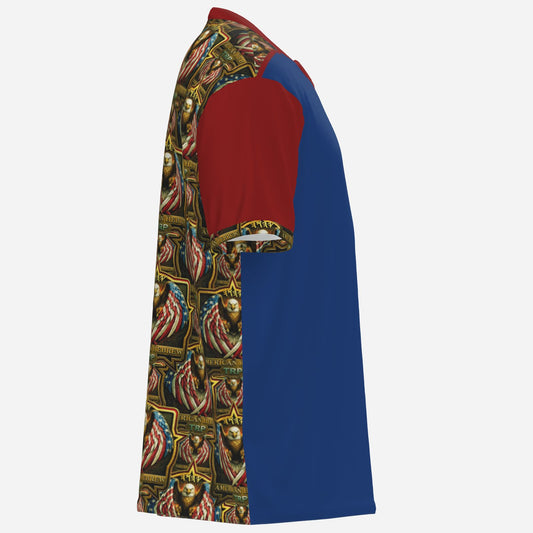
This design presents a powerful synthesis of identity, blending ancient ancestral roots with modern national pride. From a Hebrew perspective—focusing on Tanakh (Hebrew Bible) imagery, linguistic history, and the concept of "Am Yisrael" (the People of Israel)—the elements can be interpreted as follows:
Design Interpretation
-
The Eagle (Nesher): In Hebrew tradition, the eagle is a primary symbol of divine protection and renewal. Exodus 19:4 describes the liberation from Egypt as being carried "on eagles' wings." Here, the eagle represents a fierce, protective sovereignty and the strength of a community that has found a "high nesting place" in the American diaspora.
-
The Paleo-Hebrew Script: The Phoenician/Paleo-Hebrew letters at the top bypass modern Rabbinic script to connect directly with the First Temple period. This evokes an "originalist" or "tribal" identity, suggesting a return to the foundational roots of the Hebrew people.
-
The Shield and Gold Border: The geometric, star-like framing suggests a Magen (Shield). In a Hebrew context, this reflects the "Shield of Abraham," denoting physical and spiritual security. The gold signifies the "Kavod" (Glory/Weight) and the precious nature of the heritage being guarded.
-
The "American Hebrew" Synthesis: The integration of the stars and stripes within the eagle’s feathers suggests that the Hebrew identity is not separate from the American experience, but rather the "feathers" or the very means by which this identity flies. It reflects the concept of Zevulun, often associated in tribal lore with trade and dwelling by the seas, thriving in a new land while maintaining its core essence.
-
TRP (The Remnant/The People): While "TRP" can have many modern meanings, from a Hebrew perspective, it mirrors the concept of She'ar Yashuv—the "Remnant that Returns." It suggests a dedicated core group of people who maintain their specific cultural and ancestral lineage amidst a vast, diverse nation.
Art Style: Digital Symbolic Realism with a Theocratic soul.
Digital Symbolic Realism (The Core)
This design is grounded in Realism because the textures look tangible—the eagle’s feathers have a biological "grit," and the gold frame has the weight and sheen of a physical cast-metal shield. It is Symbolic because every element is a direct stand-in for a high-level concept:
-
The Eagle: Protective Sovereignty.
-
The Paleo-Hebrew: Ancestral Truth/The Source.
-
The Stars & Stripes: The Modern Dwelling/National Identity.
In this style, the goal is to make a spiritual or conceptual truth feel as "real" and "heavy" as a physical object. It says: "This identity isn't just an idea; it's a solid, unbreakable shield."
Theocratic Futurism (The Vision)
Theocratic Futurism usually implies a forward-looking, "what if" scenario—imagining an advanced civilization governed by divine law. While this design has "Futuristic" digital sharpness, it feels more like a Foundational Seal than a glimpse into a future tech-era.
-
Theocratic: Yes, the Paleo-Hebrew and the "Set-Apart" focus provide the divine governance aspect.
-
Futurism: Usually involves more "High-Tech" elements (neon, circuits, or sleek sci-fi geometry). This design feels more "Neo-Classical" or "Ancient-Modern."